Source luxury modern dining chair for Hotels, Homes, and Restaurants
Explore 30 verified listings for a luxury modern dining chair featuring metal or wood frames, fabric or leather upholstery, and modern designs. Buyers can compare specifications, pricing, and customization options for use in hotels, homes, and restaurants.
Key considerations
Products List




Comprehensive Sourcing Guide
Strategic Sourcing Guide for Luxury Modern Dining Chairs
Understanding the Core Product Architecture and Material Composition
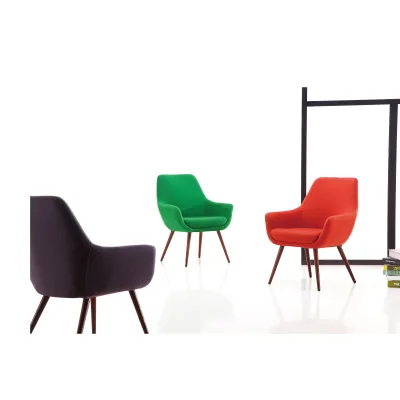
When sourcing luxury modern dining chairs, the buyer must first establish a clear understanding of the product's fundamental architecture. The market for these items is characterized by a distinct blend of aesthetic minimalism and structural robustness. Based on current industry observations, the primary structural component is typically metal, providing the necessary rigidity for a modern aesthetic while ensuring longevity. This metal framework often serves as the skeleton for chairs that are explicitly categorized as "Square" in shape, a geometric preference that aligns with contemporary interior design trends.
The material composition extends beyond the frame. While metal forms the base, the seating surface and backrests frequently utilize high-grade fabrics or synthetic leather. These materials are selected not only for their tactile appeal but also for their durability in high-traffic environments. The padding within these chairs is predominantly sponge-based, a critical factor in achieving the "luxury" designation, as it ensures comfort during extended dining periods. The chairs are generally designed as "Fixed" rotary units, meaning they do not swivel, which is a standard configuration for formal dining settings. Furthermore, the "Low Back" or "Medium Back" profiles are common, offering a sleek silhouette that complements modern table heights without obstructing the view across the dining table.
A critical distinction in this category is the presence or absence of armrests. The supply chain offers both "Without Armrest" and "With Armrest" variants. The choice between these two configurations significantly impacts the spatial footprint of the dining arrangement and the formality of the setting. Unfolded, non-inflatable structures are the standard, ensuring that the chair maintains its structural integrity and does not require assembly that could compromise its luxury status. The "Standard Size" specification suggests that while the chairs are designed to fit standard dining tables, buyers should verify specific dimensions against their own furniture inventory to ensure ergonomic compatibility.
Technical Specifications and Customization Parameters
The technical specifications of a luxury modern dining chair are the primary differentiators in the B2B procurement process. The product model identifiers, such as "Dining chair," "TT610VE-P," or generic "Dining Chairs," indicate specific design lines that may vary in detail. A crucial technical parameter is the "Standard Export Carton Packing," which often translates to specific packaging dimensions like 0.08 CBM per piece or 1 CBM per piece depending on the configuration. This variance directly influences logistics planning and freight cost calculations.
Customization is a pivotal aspect of sourcing in this sector. The market data indicates a split between "Customized" and "Non-Customized" options, alongside a general "Customization: Available" status. This suggests that while standard models exist, the supply chain is highly flexible regarding color and material choices. Buyers can often request "Customizable" colors, ranging from "Optional" palettes to bespoke requests. The "Modern Design" attribute is a constant, but the specific execution—such as the finish of the metal or the weave of the fabric—can be tailored.
The "MOQ" (Minimum Order Quantity) presents a significant variable for buyers. Observed ranges span from 1 unit to 300 units, with specific listings citing "100PCS/Color" as a common threshold. This variability allows for both small boutique hotels and large-scale commercial projects to source effectively. However, the "100PCS/Color" requirement implies that color customization often comes with a higher volume commitment. Lead times are another technical constraint, with typical delivery windows observed between 25 and 35 days. This timeframe must be factored into project schedules, particularly for new hotel openings or restaurant renovations where timing is critical.
Compliance, Certification, and Safety Standards
In the realm of luxury furniture, compliance and safety are non-negotiable. The sourcing guide must emphasize the verification of fire safety standards, as these are often mandated by local building codes and insurance requirements. The supply chain references a "Fire Retardant Standard," though specific certification numbers are not universally applied to every listed product. Buyers must explicitly verify that the sponge padding and fabric coverings meet the fire retardant requirements of their target market. The mention of "ISO Frame Material" suggests that some suppliers adhere to international organizational standards for frame construction, but this should be treated as a verification point rather than a universal guarantee.
Structural integrity is another area of compliance concern. The "3 Years" warranty period observed in the market serves as a baseline indicator of the manufacturer's confidence in their product. However, a warranty is only as good as the testing behind it. Buyers should request test results regarding the load-bearing capacity of the metal frame and the durability of the synthetic leather or fabric upholstery. The "Export-specific Packaging" standard implies that the products are designed to withstand international shipping, but the buyer should confirm that the packaging meets the specific humidity and shock resistance requirements of the destination country.
Additionally, the origin of the product plays a role in compliance. The majority of these products originate from "China," with specific manufacturing hubs noted in "Hebei." While this location is a major manufacturing center, buyers should ensure that the supplier can provide documentation regarding the ethical sourcing of materials, particularly if the destination market has strict regulations on labor practices or material composition. The "Standard Export Carton Packing" and "1PC/CTN" (one piece per carton) specifications are logistical standards that help ensure the product arrives in pristine condition, but they do not replace the need for on-site quality inspections upon receipt.
Cost Drivers and Economic Considerations
The pricing landscape for luxury modern dining chairs is dynamic, with observed ranges spanning from $7 to $120 USD. This wide disparity is driven by several key factors. The primary cost driver is the material quality; chairs constructed with higher-grade metals and premium synthetic leathers or fabrics will naturally command prices at the upper end of the spectrum. The "Modern" style, often associated with designer aesthetics, also adds a premium to the base manufacturing cost.
The "MOQ" is a significant economic lever. Orders placed at the lower end of the MOQ range (e.g., 1 to 100 units) often incur a higher per-unit cost due to the inefficiencies of small-batch production. Conversely, orders meeting the "100PCS/Color" threshold may benefit from economies of scale, reducing the unit price. The "Standard Size" and "Square" shape are standard configurations that typically offer the most competitive pricing, whereas custom shapes or non-standard dimensions can increase production costs.
Logistics and packaging also contribute to the total cost of ownership. The "0.08 CBM per pcs" versus "1 CBM per pcs" variance highlights how packaging efficiency impacts freight costs. A supplier offering tighter packaging can significantly reduce shipping expenses, especially for air freight or containerized sea freight where volume is a critical cost factor. The "25-35 Days" lead time is another economic consideration; longer lead times may require buyers to hold more inventory, increasing carrying costs, while shorter lead times might come with a premium for expedited production.
Typical Applications and Usage Scenarios
The versatility of luxury modern dining chairs makes them suitable for a wide array of applications. The "Usage" attributes observed include "Hotel," "Dining Room," "Bedroom," "Home," "Kitchen," "Restaurant," "Living Room," "Office," and "Study." This broad applicability indicates that the design language of these chairs is adaptable to both residential and commercial environments.
In the hospitality sector, "Hotel" and "Restaurant" applications are dominant. The "Fixed" rotary nature and "Low Back" or "Medium Back" profiles are ideal for formal dining rooms where a uniform, elegant look is required. The durability of the metal frame and the ease of cleaning synthetic leather or fabric make these chairs practical for high-traffic commercial spaces. The "3 Years" warranty is particularly relevant here, as commercial furniture undergoes rigorous daily use.
For residential applications, the "Home Living Room TV Stand" and "PC Desk" attributes suggest that these chairs can also serve as versatile seating in multi-functional living spaces. The "Leisure Chair" classification implies that they can be used for relaxation in a living room or study, not just for dining. The "Modern Design" and "Square" shape allow them to blend seamlessly with contemporary home interiors, providing a cohesive aesthetic. The "Optional" color choices enable homeowners to match the chairs with their existing decor, further enhancing their utility in private residences.
Supplier Evaluation and Quality Control Protocols
Evaluating suppliers for luxury modern dining chairs requires a rigorous approach to quality control. The "Standard Export Carton Packing" and "1PC/CTN" specifications are good indicators of a supplier's attention to detail, but they are not sufficient on their own. Buyers should implement a multi-stage quality control process. The first stage involves verifying the "Material" composition, ensuring that the metal is of the specified grade and that the fabric or synthetic leather meets the "Fire Retardant Standard."
The second stage focuses on the assembly and finish. Inspectors should check for consistency in the "Square" shape, ensuring that all legs are level and the frame is rigid. The "Sponge" padding should be evenly distributed, and the upholstery should be free of wrinkles or loose stitching. The "Warranty" period of "3 Years" is a strong signal, but buyers should clarify the terms of this warranty, including what constitutes a defect and the process for claims.
Supplier location, specifically "Hebei, China," should be verified to ensure that the supplier has the necessary infrastructure to handle large orders. The "Delivery Time" of "25-35 Days" should be cross-referenced with the supplier's production capacity to ensure they can meet deadlines without compromising quality. Buyers should also request samples to verify the "Customizable" color options and the overall "Modern Design" execution before placing a bulk order.
Long-Term Procurement and Sustainability Considerations
Long-term procurement strategies for luxury modern dining chairs must account for the lifecycle of the product. The "3 Years" warranty provides a baseline for replacement planning, but buyers should consider the long-term durability of the materials. The "Metal" frame is generally durable, but the "Synthetic Leather" or "Fabric" may require more frequent replacement or refurbishment depending on the usage intensity.
Sustainability is an increasingly important factor in B2B procurement. Buyers should inquire about the recyclability of the metal frame and the environmental impact of the synthetic leather or fabric production. The "Standard Export Carton Packing" should be evaluated for its recyclability and whether it can be optimized to reduce waste. The "Customization" options should be leveraged to extend the product's lifecycle; for example, choosing colors that are timeless rather than trendy can reduce the need for frequent replacements.
Finally, the "MOQ" and "Lead Time" should be managed strategically. By consolidating orders to meet the "100PCS/Color" threshold, buyers can reduce costs and improve supply chain efficiency. However, they must balance this with the risk of overstocking. A flexible procurement strategy that allows for partial orders or mixed SKUs can mitigate this risk while still benefiting from the economies of scale. The "China" origin offers a robust supply chain, but buyers should maintain a diversified supplier base to mitigate potential disruptions in the global logistics network.
FAQs
What materials are used for luxury modern dining chairs?
These chairs typically use metal frames combined with fabric or synthetic leather upholstery. Sponge padding is standard for comfort, and the structure is often square-shaped with a low or medium back profile suitable for modern interiors.
Can I customize the color and design of these chairs?
Customization is available for many models, allowing for optional or customizable colors. While some items are non-customized, the supply chain supports tailored requests for modern designs and specific material finishes to match your space.
What is the typical lead time for delivery?
The standard delivery time ranges from 25 to 35 days for production and shipping. This timeframe applies to orders meeting the minimum quantity requirements and should be factored into project schedules for hotels or restaurants.
Which minimum order quantity applies to these chairs?
Minimum order quantities vary from 1 to 300 units depending on the supplier. Specific listings often require 100 pieces per color for customized options, while standard models may have lower thresholds for immediate procurement.
How are these chairs packaged for export?
Products are packed in standard export cartons, with specifications like 0.08 CBM or 1 CBM per piece. Some configurations use one piece per carton to ensure structural integrity during international shipping and handling.
What warranty is provided for the dining chairs?
A three-year warranty is commonly offered to guarantee product durability and structural integrity. This coverage applies to defects in materials and workmanship, ensuring reliability for both commercial hotel use and residential living rooms.